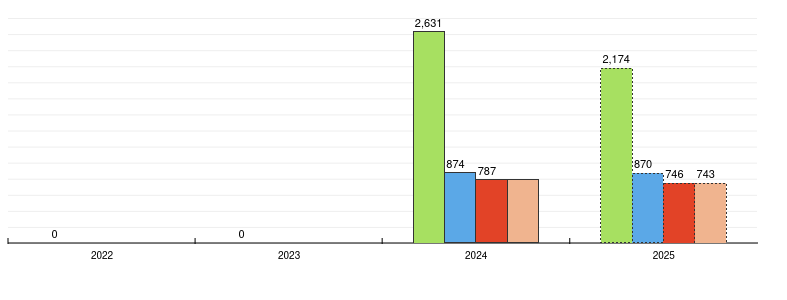
.:: Indexing ::.

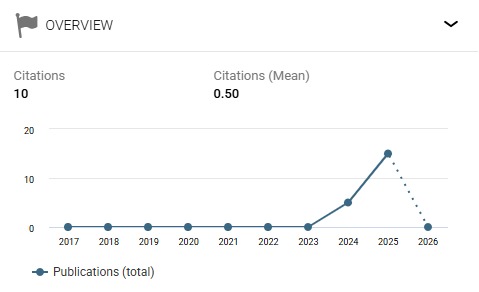
Scopus:


Vocational: Journal of Educational Technology is committed to ensuring a rigorous, transparent, and ethical peer review process. All submitted manuscripts are evaluated in accordance with international publishing standards and ethical guidelines established by the Committee on Publication Ethics (COPE).
The journal implements a double-blind peer review system to maintain fairness, objectivity, and academic integrity.
All submitted manuscripts undergo an initial screening by the editorial team to assess:
Manuscripts that do not meet these criteria may be rejected without external review (desk rejection). Authors may be asked to revise the manuscript prior to peer review if minor issues are identified.
This journal applies a double-blind peer review process, in which:
This approach ensures an unbiased and independent evaluation of all submissions.
Each manuscript is reviewed by at least two independent reviewers with expertise in the relevant field. In cases of conflicting recommendations, an additional reviewer or editorial board member may be consulted.
Reviewers are selected based on:
The editorial team ensures that:
The journal strictly avoids the use of fake reviewers and adheres to best practices in reviewer selection.
Reviewers are requested to evaluate manuscripts based on the following criteria:
Reviewers provide constructive feedback and recommend one of the following decisions:
The final decision on a manuscript is made by the Editor-in-Chief or handling editor, based on reviewers’ comments and recommendations.
Editorial decisions are independent, objective, and free from commercial or external influence.
Authors will receive:
Authors are required to:
Revised manuscripts may be returned to reviewers for further evaluation.
The journal is committed to maintaining an efficient and timely review process. The average timeline is as follows:
The total time from submission to final decision may vary depending on revisions.
All manuscripts are screened using plagiarism detection software (e.g., Turnitin or iThenticate).
All manuscripts and review reports are treated as confidential documents.
Reviewers must not:
Confidentiality must be maintained both during and after the review process.
All participants (authors, reviewers, editors) must disclose any potential conflicts of interest.
Reviewers should decline invitations if they:
Editors will ensure that any conflicts are managed appropriately.
The journal adheres to COPE guidelines and takes ethical misconduct seriously, including:
Suspected misconduct will be investigated in accordance with COPE procedures.
The journal ensures:





Editorial Office:
Vocational: Journal of Educational Technology, Yayasan Pendidikan dan Pengembangan Harapan Ananda.
Jln. Arteri Supadio, Komplek Pondok Indah Lestari, Sungai Raya, Kubu Raya, Kalimantan Barat, Indonesia, 782393.
Telp/Fax: +62 82386200610
E-mail: jvocational@smpharapanananda.sch.id

Vocational: Journal of Educational Technology is licensed under a Creative Commons Attribution 4.0 International License