Digital Technology in Mathematics Education: A Bibliometric Analysis and PAGER-Based Scoping Review
DOI:
https://doi.org/10.58740/logarithma.v1i1.812Keywords:
Digital Technology, Mathematics Education, Bibliometric Analysis, Scoping Review, Pager FrameworkAbstract
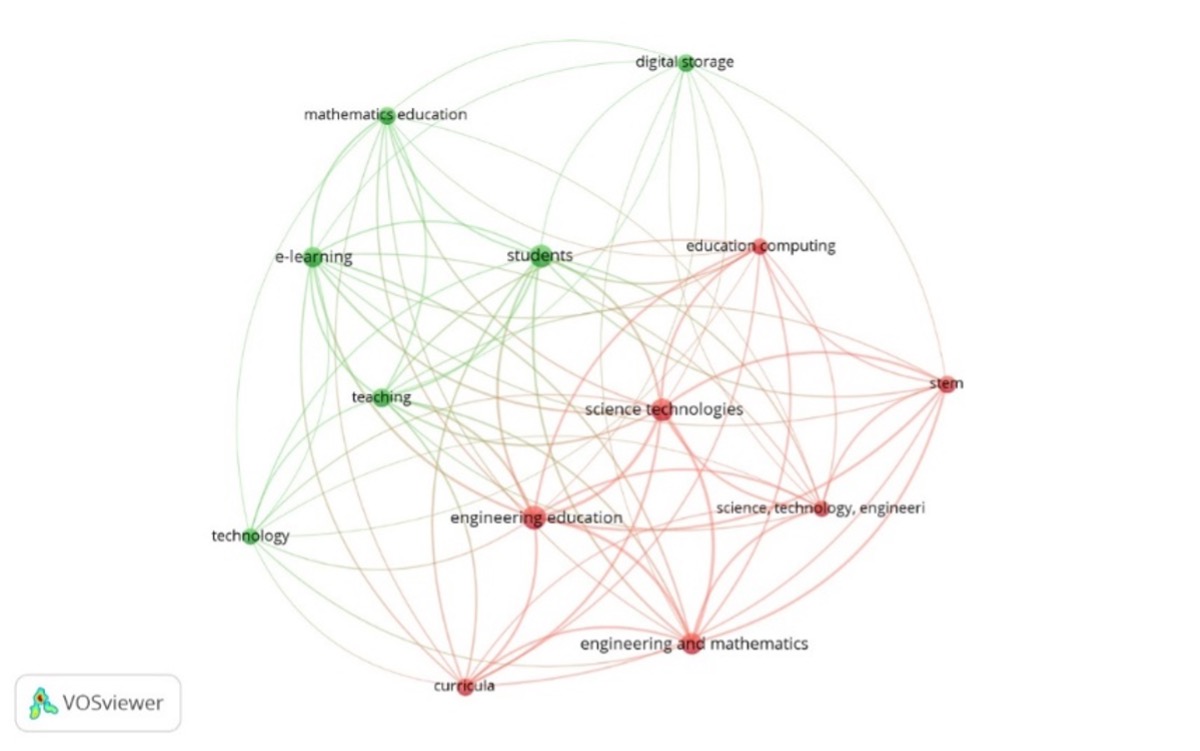
Digital technology increasingly shapes mathematics education, but rapid publication growth makes the field difficult to map. This study analyzes Scopus-indexed research from 2011 to 2025 using Scoping Review and Bibliometric Analysis (ScoRBA). Bibliometric analysis examined publication trends, authors, affiliations, countries, and keywords, while PAGER synthesis interpreted representative studies. From 172 initial documents, 49 English-language journal articles were included and eight were reviewed qualitatively. Findings show growth after 2017, with China, the United States, and Spain as leading contributors. Keyword analysis revealed three clusters: mathematics learning with e-learning and technology, STEM-oriented digital integration, and digital learning systems with mathematical software and accessibility-oriented e-learning. The PAGER synthesis indicates that digital technology is most meaningful when integrated with purposeful pedagogy, teacher guidance, accessibility, and evidence-based instructional design.
Downloads
Published
How to Cite
Issue
Section
License
Copyright (c) 2026 Beben Gusti Maisyah, Hodiyanto, Andi Mariani Ramlan, Daisy Mae R. Bongtiwon

This work is licensed under a Creative Commons Attribution 4.0 International License.