Geometric Concepts and Non-Standard Measurement in Dayak Sawe Indigenous Farming Tools: An Ethnomathematical Study
DOI:
https://doi.org/10.58740/logarithma.v1i1.782Keywords:
Ethnomathematics, Geometric, Non-Standard, Ethnographic, Indigenous Farming ToolsAbstract
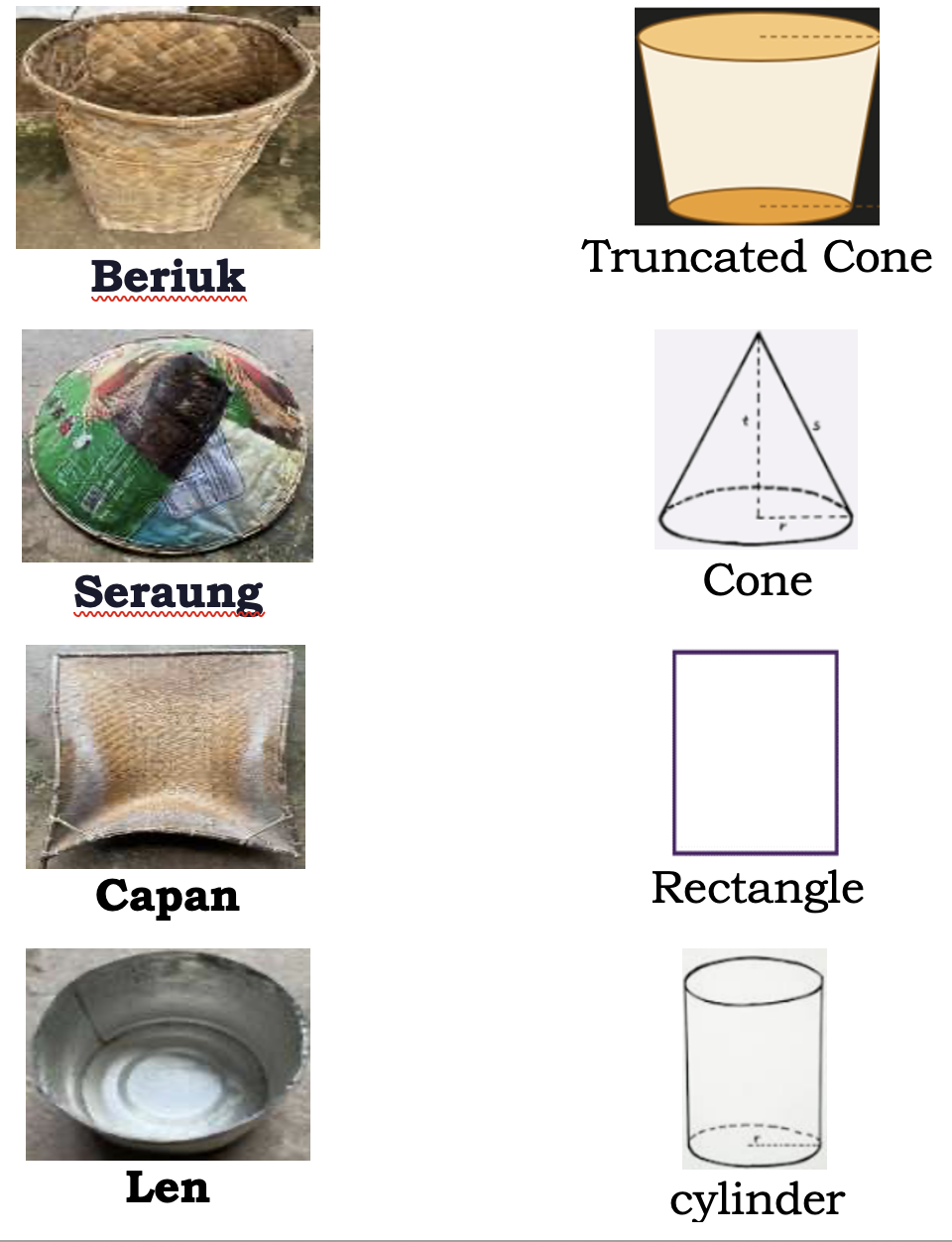
This study aims to explore geometric concepts and non-standard measurement systems in the traditional farming tools of the Dayak Sawe community in Odong Hamlet, Sekadau Regency, West Kalimantan. A qualitative approach with an ethnographic type was used in this study. The research subjects were traditional leaders, farming tool craftsmen, and the general public of the Dayak Sawe community. Data were collected through observation, semi-structured interviews, and documentation, then analyzed using the Miles and Huberman model. The results of the study found 13 types of farming tools containing geometric concepts of both two-dimensional and three-dimensional shapes, as well as body-based non-standard measurement systems such as depa (the distance from the right hand to the left hand when stretched out), seta, and jengkal (distance from the tip of the thumb to the tip of the little finger). There is a close relationship between the geometric shape of the tools and the type of measurement used in the manufacturing process. This study contributes to the study of ethnomathematics and can serve as a contextual learning resource based on local wisdom.
Downloads
Published
How to Cite
Issue
Section
License
Copyright (c) 2026 Romi Genesius, Sandie, Hodiyanto, Mathias Tejera

This work is licensed under a Creative Commons Attribution 4.0 International License.